
Information about Photosensitive Seizure Disorders
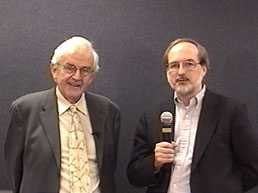
During the initial development of PEAT, Trace Center Director Gregg Vanderheiden conducted a short interview with Dr. Graham Harding, who is a leading expert on photosensitive seizure disorders. The interview provides an introduction to photosensitive seizure disorders and outlines some of the basic features and design goals of the PEAT tool. A transcript of the interview is available.
What is a photosensitive seizure disorder?
Epilepsy is the most commonly known type of photosensitive seizure disorder, but there are others as well. These conditions are characterized by seizures exclusively provoked by flashing, intermittent light, and visual patterns.
How many people have photosensitive seizure disorders?
About one in four thousand people are diagnosed with photosensitive epilepsy. Not all people with epilepsy have photosensitive epilepsy. A person is not considered to have a photosensitive seizure disorder until they have had a seizure. The majority of sufferers’ first seizures occur between the ages of seven and fifteen years old. Photosensitive seizure disorder is twice as common in females as in males and is a function of binocular vision.
What can stimulate photosensitive seizures?
Certain flashing lights, images, and repetitive patterns may cause seizures in persons with photosensitive seizure disorder. Strobe lights, flicker of bright light through leaves, and sunlight flashing off of a series of windows are examples of known stimuli. Some people are known to be affected by the raster rate of cathode ray tube televisions, especially in Europe, where the standard is 50 Hz. Video content, whether on television, film, in computer games, or on the web, may include unsafe flicker, colors, or high-contrast patterns that induce seizure. For example, in 1997 a Pokémon episode broadcast in Japan showed a sequence of flickering images which triggered seizures in hundreds of children.
What should I do if someone I know has a seizure?
Get the person on his or her side and into the recovery position. This will allow his or her airway to remain clear in case he or she were to vomit. Make sure the person is in a safe area with nothing to harm him or herself on. Do not try to hold the person down or force something between their teeth. It is common for individuals who have had a seizure to be very tired afterward and there is no reason to not allow them to go to sleep if they want to. Once you are sure the person is safe, seek medical assistance.
How long do photosensitive seizures last?
They are usually relatively short and should not last for more than five minutes.
Are seizures always severe?
No. Sometimes, all that will happen is that a person’s eyes will flutter and they will lose focus for a moment. In other cases, they may just give a quick jerk.
What current computer or web content guidelines or regulations have specifications regarding flashing?
- Section 508 of the Workforce Investment Act of 1998; sections 1194.21 (k) and 1194.22 (j) (computer software and web content)
- Web Content Accessibility Guidelines (WCAG) 1.0
- Web Content Accessibility Guidelines (WCAG) 2.0 (The PEAT analysis matches the specifications used in WCAG 2.0)
- HFES 200 Software User Interfaces Standard
- ISO 9241-171 Software Accessibility Standard
Where can I find more information about photosensitive seizure disorders?
- Epilepsy Action – site maintained by the British Epilepsy Association, includes information about photosensitive epilepsy.
- Epilepsy Foundation –site maintained by the Epilepsy Foundation (U.S.), including examples of triggers and tips on how to avoid photosensitive seizures.
Funding for this work has been provided by the National Institute on Disability and Rehabilitation Research (NIDRR), U.S. Department of Education, under grants H133E980008, H133E030012, and H133E080022.